
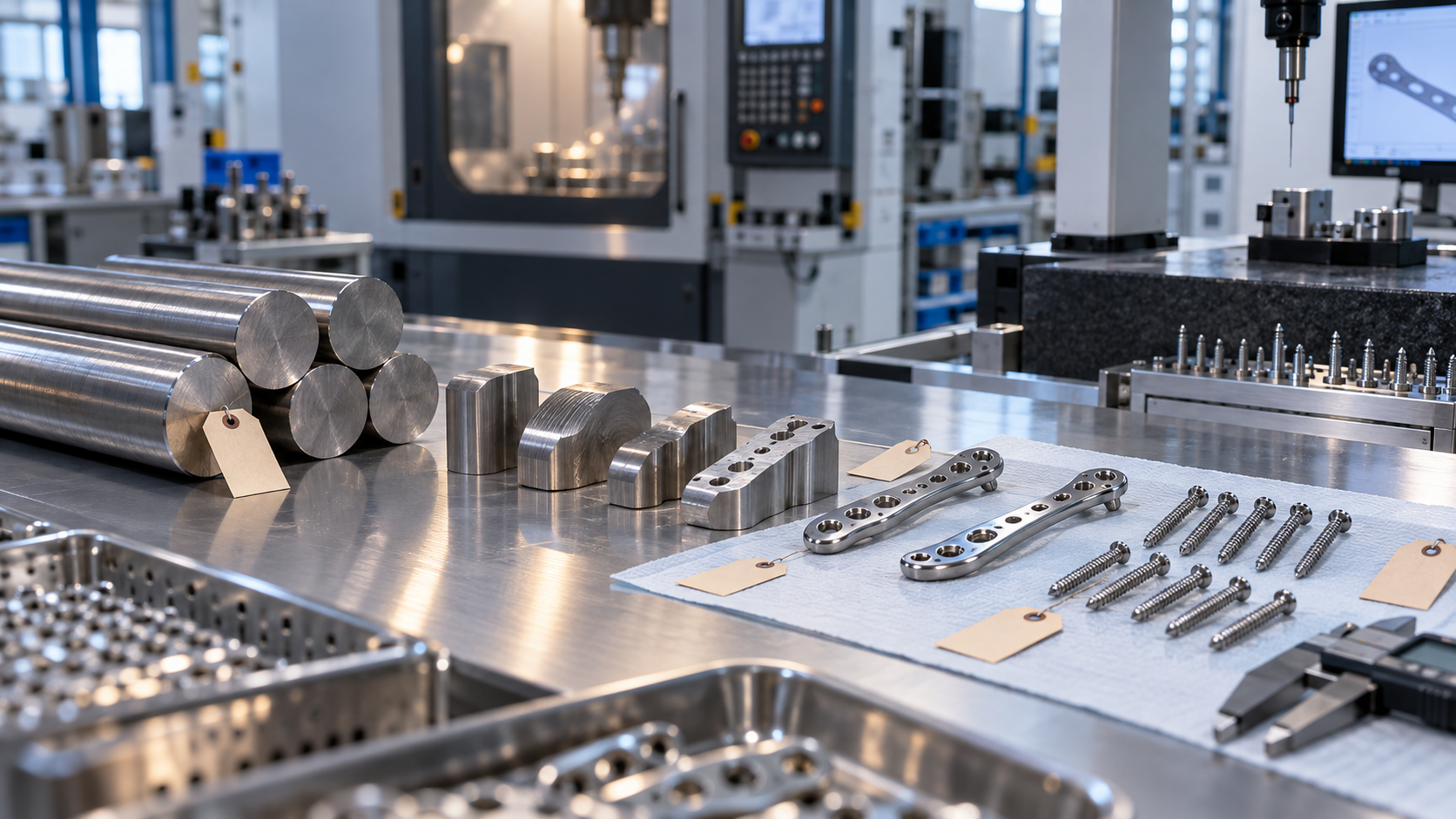
Traceability begins before the first machining operation. Every implant lot must remain connected to its certified raw material, controlled process route and inspection history.
Receiving and identity
Material certificates, heat numbers and dimensional checks establish the identity of incoming titanium bar stock. Accepted material receives an internal lot identity that follows it through production.
A connected production record
Work orders link machines, programs, operators, tooling and in-process inspection results. Segregation and status controls help prevent unverified material from moving forward.
Release and retention
- Final dimensions are verified against controlled drawings.
- Surface and cleaning records are linked to the lot.
- Packaging labels carry the released identity forward.
- Records are retained for investigation and regulatory review.
The result is a documented chain from certified bar stock to every released implant package.
Supplier qualification and incoming control
Traceability depends on more than retaining a material certificate. Approved suppliers, purchasing specifications and receiving procedures establish what must accompany each delivery and how identity is verified. Certificate data is checked against the purchase requirement, while dimensions, condition and identification are confirmed before material is released to production.
Any discrepancy must be contained and resolved before the stock enters normal flow. This prevents uncertain material from becoming mixed with accepted inventory and preserves a clear decision history.
Maintaining identity during machining
Bar stock is divided, issued and transformed across multiple operations. At each step, the internal lot identifier must remain connected to the work order and physical material. Controlled containers, route cards and electronic transactions help maintain that connection when parts move between turning, milling, deburring and inspection.
- Only released programs and drawings are used.
- Machine, operator and inspection records are linked to the order.
- Nonconforming pieces are identified and physically segregated.
- Quantities are reconciled through each manufacturing stage.
Special processes and external services
Cleaning, passivation, coating, heat treatment or other special processes may involve additional controls or qualified external providers. Purchase orders define the required process and acceptance evidence. Returned lots are checked against dispatch records so the traceability chain remains intact outside the primary facility.
Inspection data as part of the history
Inspection is not a separate certificate attached at the end. In-process and final results belong to the device history. Measuring equipment identity, calibration status, sampling plans and acceptance results provide evidence that the released lot met its controlled specification.
When automated measurement systems are used, result files should be protected, reviewed and associated with the correct order. Manual checks require the same discipline in recording actual results and disposition.
From finished part to packaged device
After final acceptance, lot identity follows components into cleaning, packaging and labelling. Label reconciliation and release review confirm that the package carries the intended product code, lot and applicable status. The complete record enables a finished device to be traced backward to material and process evidence and forward to distribution records.
Why the digital thread matters
A connected record shortens investigations, supports targeted containment and gives regulatory reviewers a coherent view of control. The strongest traceability systems are built into everyday transactions, making the correct action the easiest action for operators and inspectors.